Foundation Raising
When raised slabs have sections that need removal before repair, precision concrete cutting prepares the area cleanly - often the two services are coordinated as a single project.
Learn more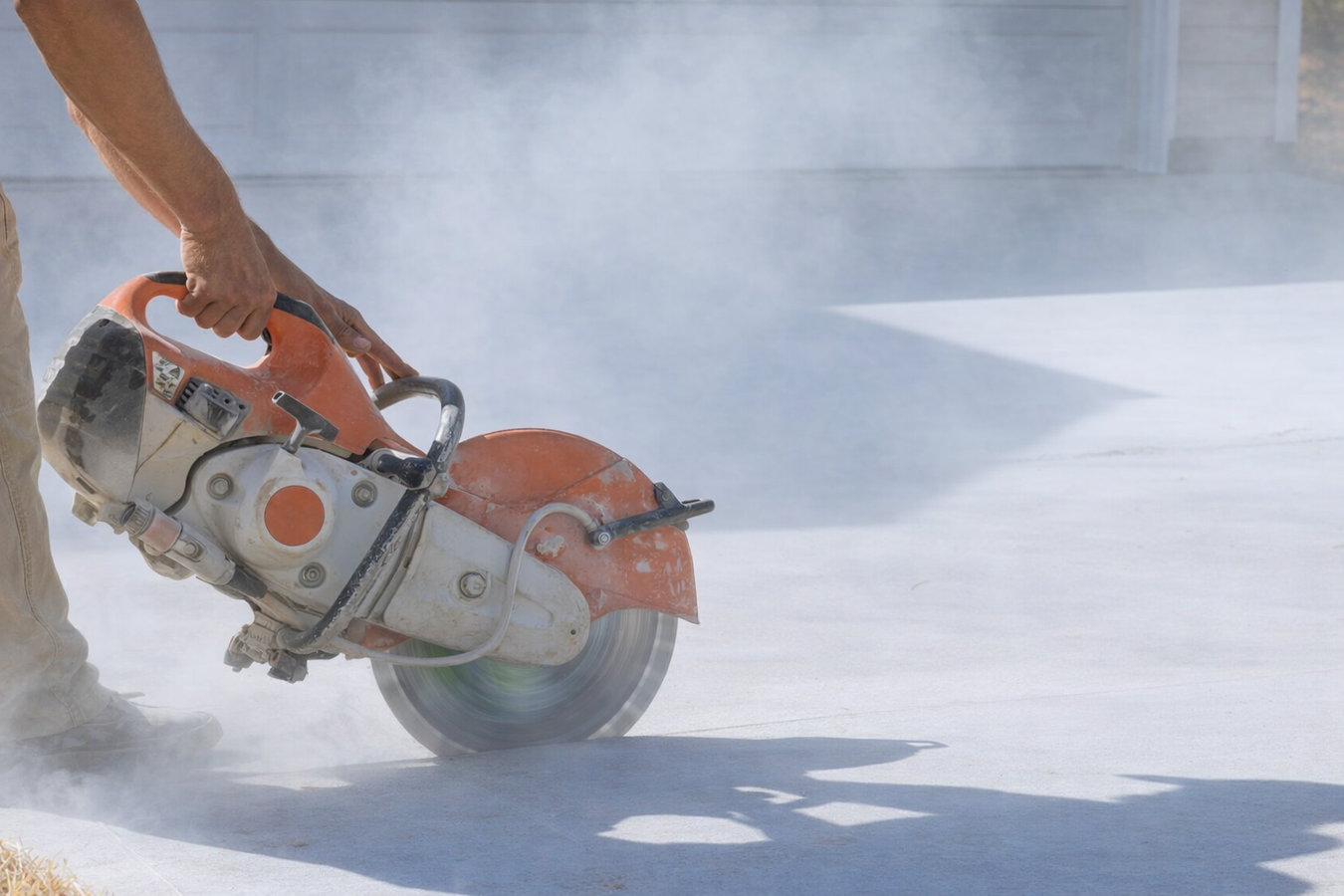
Flat sawing, wall sawing, core drilling, and wire sawing for residential and commercial properties across Corona. We pull city permits, locate utilities, and deliver clean cuts - no guesswork, no damage to surrounding concrete.
Concrete cutting in Corona uses diamond-blade saws and core drills to open, modify, or prepare concrete structures with controlled, precise cuts - enabling utility work, structural modifications, and repairs that cannot be done without removing material from an existing slab or wall.
Most Corona homeowners encounter concrete cutting when a plumber needs access beneath a slab, when a new electrical conduit has to pass through a wall, or when a driveway or floor needs expansion joints cut to control future cracking. On commercial properties, concrete cutting enables doorway additions, HVAC penetrations, and utility upgrades without tearing out an entire structure.
When cutting is paired with full material removal, our concrete demolition service handles the break-out and haul-away. When raised foundation slabs need sections removed before repair, cutting and foundation raising are often coordinated as part of the same project.
Different cuts require different equipment. We carry the full range of cutting methods so the right tool is always matched to the job.
The most common concrete cutting method for horizontal surfaces - floors, driveways, slabs, and roadways. A walk-behind saw with a diamond blade cuts straight lines to a controlled depth. Used for utility trenches, expansion joints, and sectioning slabs for partial removal. Most residential cutting jobs in Corona start here.
A track-mounted saw that cuts vertical or angled surfaces - walls, ceilings, bridge abutments, and retaining walls. Used when a precise rectangular opening needs to be cut through a vertical concrete structure, such as adding a doorway or window to a block or poured concrete wall. Produces cleaner edges than breaking.
A rotating diamond-bit drill that cuts clean circular holes through concrete for pipes, conduits, anchor bolts, and HVAC penetrations. The most common method for creating utility penetrations through slabs and walls without damaging the surrounding concrete. Core diameters range from small conduit holes to large drain openings.
A diamond-wire loop used to cut through extremely thick or heavily reinforced concrete structures where conventional blades cannot reach. Most often used on large commercial or infrastructure projects - bridge piers, heavy retaining walls, or concrete structures too thick for standard flat or wall saws.
These are the most frequent reasons Corona homeowners and commercial property owners call for concrete cutting. If your project does not fit one of these categories exactly, describe what you need - there is almost always a method that fits.
When a plumber needs to access or replace drain lines, water supply lines, or sewer connections beneath a concrete slab, the slab must be opened first. Flat sawing creates a clean trench that is easier and cheaper to patch than a broken, irregular opening.
Concrete slabs expand and contract with temperature changes. Without control joints cut at regular intervals, slabs crack randomly. Cutting expansion joints into an existing slab redirects future cracking to planned lines, extending the life of the concrete.
Adding a door or window to a concrete or block wall requires a precise opening cut to the correct dimensions. Wall sawing produces cleaner, more structurally sound results than breaking through with a jackhammer.
Core drilling creates clean holes for electrical conduit, data cables, and other utility penetrations through slabs and walls. Cleaner than breaking and far easier to seal properly after the conduit is installed.
When only a section of a driveway, patio, or floor needs to be replaced, flat sawing defines the removal boundary cleanly so the remaining concrete is not damaged. This is standard preparation before any targeted slab replacement.
Mechanical, plumbing, and HVAC rough-ins on new additions or remodels often require core-drilled penetrations through existing concrete slabs or walls to route new systems without tearing out large areas of structure.
Corona's established residential neighborhoods - many built in the 1970s, 80s, and 90s - have dense underground infrastructure beneath their slabs and driveways. Water supply lines, sewer laterals, irrigation systems, and electrical conduit run at varying depths and directions that are not always documented accurately on old blueprints. Before any concrete cutting begins on a Corona property, underground utilities must be located and marked. California state law requires a call to 811 before digging - and responsible contractors will not start cutting until that process is complete.
The reinforced concrete used in Corona's commercial properties and newer residential foundations also tends to be thicker than older construction. Cutting through heavily reinforced or post-tensioned slabs requires the right blade selection and an experienced operator who knows how to read the tension cable layout before cutting. Severing a post-tension cable is a serious structural event - it is not a mistake that can be patched and ignored.
We work regularly in Corona and in surrounding Inland Empire cities like Ontario and Chino, where similar dense underground utility conditions apply. The permitting process and the 811 utility locate requirement are consistent across the Inland Valley - we handle both as a standard part of every job.
Describe what you need to open, where it is on the property, and roughly how thick the concrete is if you know. We will ask a few quick follow-up questions and get back to you within one business day to schedule an on-site visit.
We evaluate the slab or wall, assess thickness and reinforcement, and identify any nearby utilities or structural considerations that affect the approach. You receive a written estimate that specifies the method, scope, and price before any work is discussed. No verbal-only quotes.
Before any cutting begins, we initiate the 811 underground utility locate process. For projects where a permit is required, we handle the City of Corona application and wait for approval. The permit timeline varies but is typically a few days to a week.
We use wet-cutting methods wherever possible to control silica dust - a health and regulatory concern under OSHA's respirable crystalline silica standard. Cuts are made to the specified depth and dimension. For slab cuts, the line is patched or left open per the downstream contractor's instructions.
We assess the job in person before quoting. Utilities located, permits handled, and a clear price in writing before any blade touches concrete.
(951) 416-3795Flat sawing, wall sawing, core drilling, and wire sawing - we carry the equipment for all four methods. That matters when a single project requires more than one approach, or when site conditions on arrival call for a different method than originally planned.
We initiate 811 utility locates before every job and use wet-cutting wherever practical to control respirable silica dust under OSHA standards. These are not extras - they are how the job is done. Our license is verifiable at the California Contractors State License Board.
Many Corona homes built since the 1990s have post-tensioned slabs. Cutting these incorrectly severs tension cables and creates a serious structural problem. We identify post-tension slabs before cutting and plan accordingly - something a rental-saw operator cannot do.
Most concrete cutting in Corona is done to enable plumbing, electrical, or HVAC work. We coordinate cut dimensions and timing with your other contractors so the trench or opening is ready when they need it - and sized correctly for what they are installing.
Concrete cutting looks simple from the outside - but the margin for error on a post-tension slab, near underground utilities, or inside a building with occupants is very small. The crew and equipment you choose for that cut matter more than the price difference between quotes.
When raised slabs have sections that need removal before repair, precision concrete cutting prepares the area cleanly - often the two services are coordinated as a single project.
Learn moreFor projects where concrete needs to be removed entirely rather than opened, our demolition service handles full break-out and haul-away for slabs, driveways, and structures.
Learn moreDescribe the project - we assess in person, locate utilities, handle permits where required, and give you a written price before work begins.