Concrete Footings
If your parking lot project also includes a retaining wall or structure that needs its own footing, we handle both under one scope.
Learn more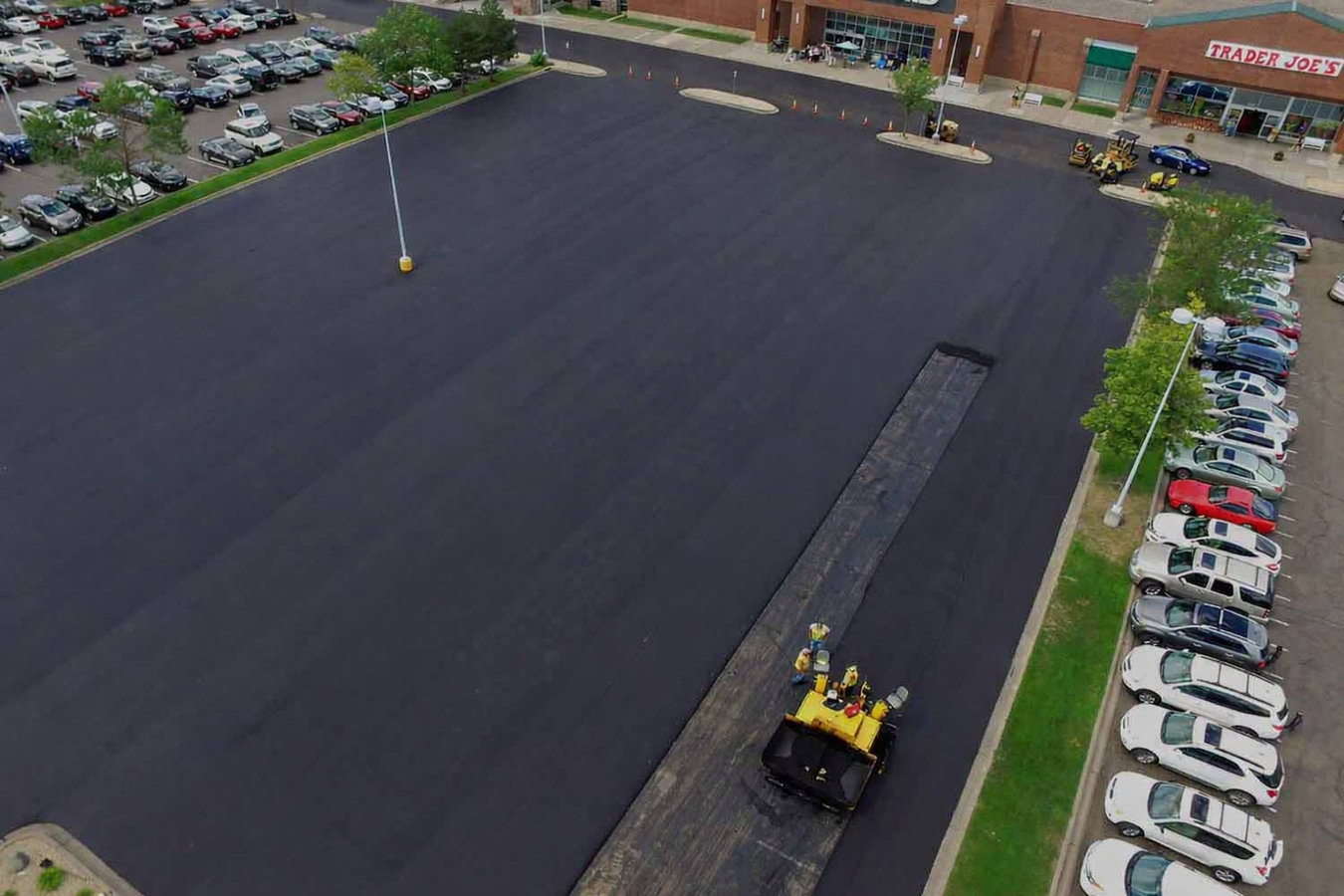
Your parking surface needs to hold up under vehicle weight, drainage stress, and the Inland Empire's extreme heat. Get a concrete lot that is built for what Corona actually demands.
Concrete parking lot building in Corona covers site excavation, base compaction for clay soil stability, reinforcing steel installation, concrete forming and pouring, and drainage design that prevents water pooling - most small to mid-size residential and commercial lots take three to five days of active work, not counting the week the concrete needs to cure before vehicles can use it.
A parking lot sounds straightforward until you start asking the questions that determine whether it lasts 5 years or 30. What is under the concrete? Where does the water go? How thick should it actually be for the vehicles you need to park? In Corona, where summer temperatures regularly push past 100 degrees and clay soils expand and shrink with the seasons, the answers to those questions directly affect whether your lot cracks, settles, or holds up the way it should. A concrete parking lot that is built correctly is one of the longest-lasting surfaces you can install on your property.
For residential driveways that connect directly to the street, our concrete driveway building service covers that specific scope - same base preparation and drainage approach, scaled for single-family use. KeenCraft Corona Concrete handles the permit application and inspection coordination through the City of Corona Building and Safety Division so the project stays on schedule.
Some of these signs are visible damage to an existing surface. Others are planning signals - you are adding a structure, converting a space, or tired of maintaining what you currently have.
If your current parking surface has cracked, crumbled, or settled unevenly, you have reached the point where resurfacing or patching no longer makes financial sense. Asphalt parking lots in the Inland Empire typically need resurfacing every 10 to 15 years, and at some point the cost of repeated repairs exceeds the cost of replacing it with a concrete surface that can last 30 to 40 years with minimal maintenance.
Standing water that does not drain away within an hour or two after a rain event is a sign that your parking area is either sloped incorrectly or has settled enough to create low spots. In Corona, where heavy rain events can drop a lot of water in a short time, poor drainage accelerates surface damage and can push water toward buildings. A new concrete lot can be designed with proper slope and drainage from the start.
If you are adding a garage, workshop, accessory dwelling unit, or commercial building on your property, you may need a paved parking area to meet city requirements. The City of Corona's building department often requires a certain amount of paved parking based on the type and size of structure being added. A concrete lot can be part of the same permit and inspection process as the structure itself.
If people regularly park on unpaved areas because your lot is too small or poorly laid out, you are creating ongoing damage to landscaping, drainage patterns, and soil compaction. In Corona, where heavy clay soils can turn into a muddy mess during winter rains, unpaved parking becomes unusable for weeks at a time. A concrete lot solves the problem permanently and adds usable square footage to your property.
We build concrete parking lots for residential properties, small commercial buildings, and multi-unit properties throughout Corona and the wider Inland Empire. Every job starts with a site visit - we assess your current surface, drainage patterns, soil conditions, and vehicle use before providing a written estimate, because the ground conditions and site access in Corona vary enough that a phone quote is rarely accurate. Permit filing and city inspection coordination are included in every project.
If your project also includes a retaining wall, structure foundation, or other concrete work that requires its own footing, our concrete footings service handles that under the same scope so you have one contractor managing the full project. For residential driveways specifically, our concrete driveway service covers that focused scope.
For single-family homes or duplexes where you need 2 to 6 parking spaces - often used for converting a gravel side yard or adding parking alongside an existing garage.
For small business properties, offices, or apartment buildings where you need a durable surface that can handle daily vehicle traffic and meet Corona's commercial parking requirements.
For properties where an existing asphalt or gravel lot has failed and needs to be removed and rebuilt with concrete, or where you need to expand an existing paved area.
Corona sits in the Inland Empire, where summer temperatures regularly climb above 100 degrees from June through September. When concrete is poured in extreme heat, it can dry out too quickly on the surface before it has fully hardened underneath, which leads to surface cracking and a weaker finished product. Contractors working in this area need to schedule pours for early morning, use water-reducing additives, and take specific steps to keep fresh concrete moist during the curing period - if a contractor does not mention heat management when you ask about summer scheduling, that is worth noting.
Much of Corona sits on expansive clay soils that swell when wet and shrink during dry periods, and that movement is one of the leading causes of concrete lot failure over time. A parking lot built on top of clay soil without the right base preparation will crack and settle as the soil moves through its seasonal cycle. We serve properties across Corona and nearby cities including Ontario, where these same soil conditions apply - assessing and addressing the soil before the pour is part of every job we do.
Here is the timeline from your first contact to the day you can park vehicles on your new concrete lot - most projects run three to five weeks from start to finish once you are on the schedule.
We come to your property to look at the existing surface, drainage patterns, soil conditions, and access for equipment. We provide a written estimate based on what we see on-site, not what we guess over the phone. Most estimates are delivered within two business days of the visit.
For a new parking lot in Corona, we file for a building permit with the City of Corona Building and Safety Division before work begins. Permit approval typically takes one to three weeks depending on the project scope and the city's current workload - we coordinate this step and keep you updated on the timeline.
Once the permit is approved, the crew removes your existing surface, excavates to the required depth, and brings in crushed rock to build a compacted base layer. This prep work is the most important part of the job - it determines whether your lot holds up for decades or starts failing within a few years.
The concrete pour itself usually happens in one day. The crew sets up forms, places steel reinforcement, pours the concrete, and finishes the surface. In Corona's heat, we take extra steps to protect the fresh concrete from drying too fast. You will need to keep vehicles off the lot for at least seven days, and full strength develops over about a month.
We respond to all estimates within one business day. No pressure, just straight answers.
(951) 416-3795We have built parking lots across Corona and throughout the Inland Empire - here is what separates our work from the low-bid contractors who disappear after the pour.
Our California Contractors State License Board number is on every estimate, and you can verify it in seconds on the CSLB website. We carry general liability and workers' compensation insurance on every job - which protects you if something goes wrong. Every permit we pull goes through the City of Corona, which means an independent inspector reviews our work before it is signed off.
We have built parking lots in Corona and throughout Riverside and San Bernardino counties, from single-family residential side yards to small commercial properties. Local experience means we know how Corona's clay soils behave, what the city's permit office expects, and how to schedule work around the summer heat - knowledge that directly affects whether your lot holds up over time.
In Corona, summer temperatures can push past 105 degrees, and extreme heat is one of the biggest enemies of fresh concrete. We schedule pours for early morning before the heat peaks, use curing compounds or wet coverings to slow the drying process, and never cut corners on curing time just to move faster. A parking lot poured correctly in summer is just as strong as one poured in perfect fall weather.
You will know upfront how long the permit process typically takes, when our crew can start, and when you can park on the new surface. We coordinate the city inspection schedule and let you know when the inspector is coming - you are never left wondering what stage your project is at or whether we are still on track.
Every one of these proof points matters to a property owner who is making a long-term investment. We combine the licensing and insurance that protects you legally with the local soil and climate knowledge that protects your parking lot structurally - so your new surface is still holding up two decades from now. Best practices published by the American Concrete Pavement Association inform every step of our approach to this work.
If your parking lot project also includes a retaining wall or structure that needs its own footing, we handle both under one scope.
Learn moreFor residential driveways that connect to the street - same base preparation and drainage principles, scaled for single-family use.
Learn moreOur calendar fills up fast in spring and fall - lock in your start date before the season gets away from you.