Concrete Parking Lot Building
For commercial and multi-unit projects that need both a structural foundation and a concrete lot surface handled by the same contractor.
Learn more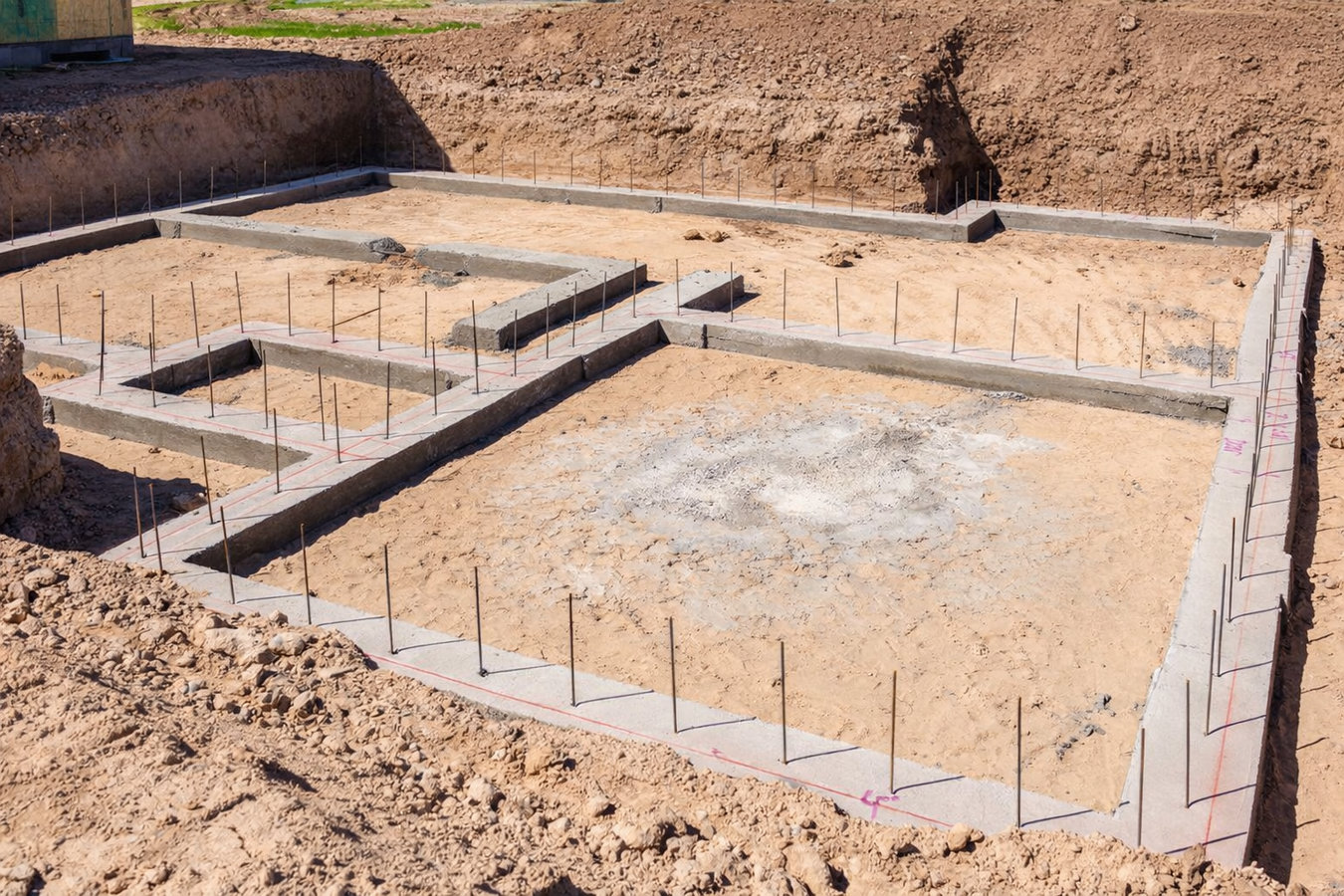
Everything your home stands on depends on the foundation beneath it. Get a licensed, permitted, seismically reinforced installation built for what Corona's soil and climate actually do.
Foundation installation in Corona covers excavation, soil assessment, steel reinforcement placement, concrete forming, and the pour that creates the structural base your home sits on - most standard residential projects run one to two weeks of on-site work once the permit is approved, with full framing typically starting about a week after the pour.
Your foundation is the concrete base that transfers the entire weight of your home safely into the ground below it. When it is built well, you never think about it. When it is not - walls crack, doors stick, floors shift, and repairs get expensive fast. In Corona, where expansive clay soils and seismic zone requirements both factor into the design, foundation installation is not a commodity service. The details of how the ground is prepared and how the steel is laid are what separate a foundation that holds for generations from one that starts moving within a few years.
For projects that are specifically a slab-on-grade pour for a new home or ADU, our slab foundation building service covers that scope. KeenCraft Corona Concrete manages the permit and inspection process through the City of Corona Building Division so your project moves on schedule.
Some of these signs come up on new construction projects. Others show up on existing homes - often ones that have been quietly shifting for longer than the homeowner realizes.
If doors or windows that used to open and close smoothly have started sticking, jamming, or leaving visible gaps at the corners, that is often a sign the structure beneath them has shifted. In Corona, this can happen when the clay soil under an older foundation swells after a wet winter or shrinks during a dry summer. It does not always mean a crisis, but it is worth having a professional assess the situation before the problem progresses.
Hairline cracks in drywall are common and usually harmless, but cracks wider than about a quarter-inch, diagonal cracks running from corners of windows or doors, or cracks in your concrete floor are worth taking seriously. These patterns often indicate uneven foundation movement - something that happens in Corona's expansive soil conditions over time. The sooner you get an assessment, the more options you have.
If you are starting a new home, accessory dwelling unit, or significant addition, you will need a foundation installed before any framing can begin. This is the most straightforward reason to call - getting the foundation engineered and built correctly at this stage is far less expensive than correcting problems after the structure above it has been framed.
Corona gets most of its rain between November and March, and if water sits against the base of your home's walls after a storm, that is a warning sign. Persistent moisture against a foundation - especially in clay soil - accelerates deterioration and can undermine the soil's ability to support the structure over time. A contractor can assess whether the issue is drainage, foundation condition, or both.
We install residential foundations for new homes, ADUs, garage conversions, and significant additions throughout Corona and the wider Inland Empire. Every project begins with a site visit - we assess soil conditions, lot drainage, and access before providing a written estimate, because the ground conditions here vary enough that a phone quote without a site visit is rarely accurate. Permit application, inspection coordination, and final permit closeout are included in every job.
For commercial projects that also require a surface lot, our concrete parking lot building service handles the lot surface work alongside the structural foundation so you have one contractor managing the full scope. For residential projects where the primary need is a standard slab-on-grade pour, our slab foundation service provides that focused scope.
For new homes and additions where a flat concrete slab is the right choice - the most common foundation type in Southern California residential construction.
For properties where site conditions, slope, or local drainage make a raised perimeter foundation with a crawl space the appropriate structural solution.
For accessory dwelling units and garage-to-residential conversions where the foundation must meet current residential occupancy codes and pass city inspection.
Corona is one of the faster-growing cities in Riverside County, and that growth means construction demand here has been consistently high. That same demand means reputable contractors can be booked weeks out, and material costs in the Inland Empire have tracked above national averages in recent years - starting your contractor search early matters. More importantly, the clay soils throughout much of the Corona area create conditions that require genuine site assessment and engineering input, not just a formulaic pour. Hot, dry summers above 95 degrees require specific scheduling and curing precautions for concrete work done between June and September.
Corona sits near the Elsinore and Chino fault systems, and California's building code for this region requires foundations to include steel reinforcement and anchor bolt placement designed for seismic performance. The City of Corona requires inspections at multiple stages of foundation work - before the pour, and at completion - which is genuinely in your favor as a homeowner. We serve projects throughout Corona and the surrounding region including San Bernardino, where the same soil and seismic conditions shape how foundation work needs to be done. The Concrete Reinforcing Steel Institute publishes the standards for reinforcement placement in seismically active areas - the approach we follow on every foundation pour.
We respond within one business day. We will ask a few basic questions about your project scope, then schedule a free on-site visit to assess soil conditions, lot access, and drainage. Foundation work is too variable to price accurately over the phone, so a site visit before the estimate is standard practice.
We submit the permit application to the City of Corona Building Division on your behalf. Once approved, we prepare the site - excavating to the required depth, grading and compacting the soil, and laying gravel for drainage. In Corona's clay-heavy ground, this phase takes the time it takes - rushing it causes problems later.
We install the steel reinforcement grid and any required plumbing or conduit rough-ins inside the forms before the pour. A city inspector visits to verify the setup meets the approved plans. This inspection is a required checkpoint - it cannot be skipped, and passing it on the first visit depends on doing the prep work correctly.
The concrete pour typically takes one day. We take hot-weather precautions for summer projects in Corona - early-morning scheduling and curing compound application to protect the surface as it hardens. A final city inspection signs off the completed work, and we walk you through the project and hand over your permit documentation.
We visit your site before quoting. We pull the permit. No pressure and no obligation.
(951) 416-3795Most of Corona sits on expansive clay soil, and a foundation that ignores that reality will move within years. We assess your specific site conditions before designing the foundation - adjusting footing depth, slab thickness, and drainage planning based on what we actually find, not a generic spec.
The Building Division schedules inspections at multiple stages of foundation work, and a contractor who is not familiar with the city's process can stall your project at every checkpoint. We handle the permit application, coordinate all required inspections, and deliver the closed-out permit documentation when the job is done.
Corona sits near active fault systems, and foundations here must meet California's structural requirements for seismic resistance - specific rebar sizing, placement, and anchor bolt locations. We build to those standards on every job, which means the work passes inspection and actually protects your structure.
We have installed foundations across our full 12-city service area in the Inland Empire, from slab-on-grade residential pours in Corona to ADU foundations in Riverside County. That track record means we know the local permit offices, seasonal scheduling constraints, and soil variability that affect how projects run in this region.
Foundation installation is the most consequential work on any new construction project - it determines what everything above it does for the next several decades. We bring the local soil knowledge, permit experience, and seismic construction standards that give you confidence the job was done right. You can verify our California contractor's license at any time through the California Contractors State License Board.
For commercial and multi-unit projects that need both a structural foundation and a concrete lot surface handled by the same contractor.
Learn moreIf your project is a standard slab-on-grade pour for a new home or ADU, our slab foundation service covers that scope specifically.
Learn moreContractor calendars in the Inland Empire fill up fast, especially heading into peak building season - getting your site visit scheduled now keeps your project on track.