Concrete Floor Installation
Once your slope is stabilized with a retaining wall, we can pour a level concrete floor or slab in the reclaimed outdoor space.
Learn more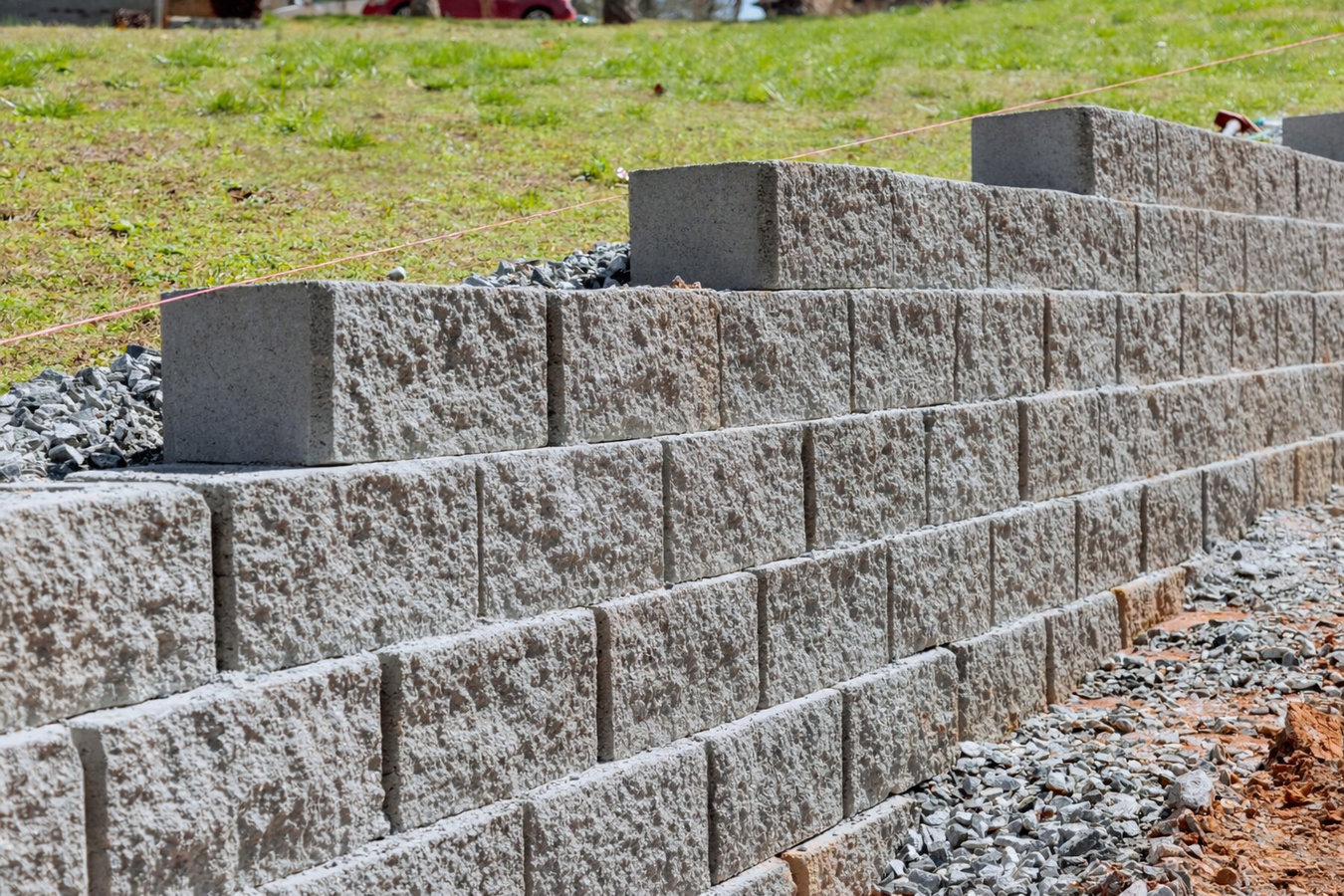
Sliding soil, a leaning wall, or a yard you cannot use because of a slope - a properly built retaining wall fixes all three and lasts for decades.
Concrete retaining walls in Corona hold back soil on sloped or uneven properties, stopping erosion and turning unusable hillside into flat, functional yard - most residential jobs take one to five days depending on wall length and height.
The work involves excavating the area, preparing a compacted base, setting forms or laying block, pouring or placing the concrete, and backfilling with drainage gravel so water does not build up pressure behind the wall. In Corona, where clay soils expand and contract with the seasons and many lots back up to hillside terrain, skipping any of these steps is what causes walls to lean, crack, or fail within a few years of being built.
If your project includes creating a new level surface behind the wall, our concrete floor installation service can handle the slab work once the wall is complete and cured. KeenCraft Corona Concrete handles permits, HOA submissions, and city inspections so you do not have to.
Several of these signs show up in Corona backyards every rainy season - and they all get worse if left alone.
If you see bare patches on a slope, soil collecting at the bottom of a grade, or the level of your yard slowly dropping near a fence line, your soil is moving. Corona's winter storms can deliver several inches of rain in a short stretch, and that water accelerates erosion fast. A retaining wall stops the movement and protects everything downhill, including your foundation.
A retaining wall that is no longer plumb is under more pressure than it can handle. Horizontal cracks near the middle, a visible lean toward the street, or gaps opening between the wall and the soil behind it are signs the wall is failing. This is not cosmetic - a fallen wall can damage fencing, vehicles, and neighboring property.
Standing water collecting against your house or along a fence line after rain often means the grade of your yard is directing runoff the wrong way. A retaining wall combined with proper grading redirects that water away from structures. Left unaddressed, water pooling against a foundation is one of the most expensive problems a homeowner can face.
Many Corona homeowners near the Santa Ana Mountains foothills have sloped backyards that are technically part of their property but completely unusable for outdoor living. A retaining wall holds back the upper slope so the lower area can be leveled and turned into a patio, garden, or play area. This is one of the most common reasons people in foothill neighborhoods call a concrete contractor.
We build poured concrete walls and concrete masonry unit (CMU) block retaining wall installations for residential properties throughout Corona and the Inland Empire. Every job includes site assessment, permit handling, excavation, proper footing depth, drainage installation behind the wall, and full cleanup. For taller walls or hillside lots, we coordinate with a licensed engineer to produce the drawings the City of Corona requires before a permit is issued.
If your project also involves structural elements below grade - fence posts, columns, or an addition - our concrete footings service can run alongside the retaining wall work so both are built on the same solid base. We also help with HOA submissions for homeowners in Sycamore Creek, Trilogy, Dos Lagos, and other master-planned communities where exterior work requires pre-approval.
Best for sites with high soil load, tighter spaces, or where a seamless, smooth face is preferred - strong and continuous with no mortar joints.
A practical option for irregular terrain or when the wall needs to follow a curved line - individual blocks allow flexibility in layout and height.
For steep slopes where a single tall wall would require heavy engineering - a series of shorter walls terraces the slope and distributes the load more evenly.
A large share of Corona's residential neighborhoods - particularly those near the Santa Ana Mountains foothills in communities like Sycamore Creek and Eagle Glen - sit on graded hillside lots where a retaining wall is not decorative but structural. On these properties, the wall is often what keeps the yard from sliding toward the house or street. The clay soils common throughout the Inland Empire swell when wet and shrink in summer heat, which puts steady stress on any wall that was not built with deep footings and proper drainage behind it.
Corona's rainy season can deliver heavy rain in short bursts, and soil behind a wall with no drainage outlet becomes waterlogged fast - building outward pressure that causes leaning and cracking. We serve homeowners across Corona and neighboring Fontana where these same conditions apply. The Federal Highway Administration and the Portland Cement Association both publish retaining wall construction standards that inform how we approach drainage and footing design on every job.
We respond within 1 business day. For retaining wall jobs, we need to see your slope in person before quoting - no honest contractor can give you a real price from a phone call alone. The site visit is free and takes 30 to 60 minutes.
After the visit you receive a written quote breaking down labor, materials, drainage, and any permit or engineering fees separately. If your wall exceeds four feet, we explain the permit timeline - typically two to four weeks for City of Corona approval.
If you live in a master-planned community, we help prepare the HOA submission first. Once approval is in writing, the permit application goes to the City of Corona. We handle the paperwork - you sign what needs signing and respond quickly if the city or HOA asks for more information.
The crew excavates, prepares the base, builds the wall, installs drainage gravel behind it, and backfills. After cleanup, a city inspector signs off on permitted jobs. Concrete reaches full strength over 28 days - avoid heavy loads against the new wall during that period.
No obligation. We visit your property, assess the slope and soil, and give you a written quote. Most responses within 1 business day.
(951) 416-3795Every retaining wall that requires a permit gets one - no exceptions. That means a City of Corona inspector independently verifies the work before the project is closed out. For you, that is a paper trail that holds up if you ever sell the home or need to make an insurance claim.
We have built retaining walls on hillside lots from Corona to Fontana and across the Inland Empire. That range of experience means we have seen what happens when drainage is skipped, when footings are too shallow, and when HOA requirements catch a homeowner off guard - and we build to avoid all of it.
Gravel backfill and drainage outlets behind the wall are standard on every job we do - not an upgrade. Water pressure is the most common reason retaining walls fail, and it is entirely preventable when drainage is engineered into the project from the start. You should not have to ask for this.
We have worked through the HOA approval process in Sycamore Creek, Trilogy, Dos Lagos, and other Corona communities. We know what drawings those associations want, what finishes they approve, and how long the process typically takes - so your project does not stall at the HOA stage.
Every one of these points traces back to the same thing: a wall that is still standing and doing its job 20 years from now. Verify any California concrete contractor's license quickly through the California Contractors State License Board - a legitimate contractor will hand you their license number without hesitation.
Once your slope is stabilized with a retaining wall, we can pour a level concrete floor or slab in the reclaimed outdoor space.
Learn moreRetaining walls depend on a solid footing - if your project also includes a structure or fence post, we handle the footings at the same time.
Learn moreOur schedule fills up before the rainy season - reach out now and lock in your project date before the ground gets wet.