Foundation Installation
For homeowners who need a full foundation system evaluated and installed - including raised foundations and more complex structural situations.
Learn more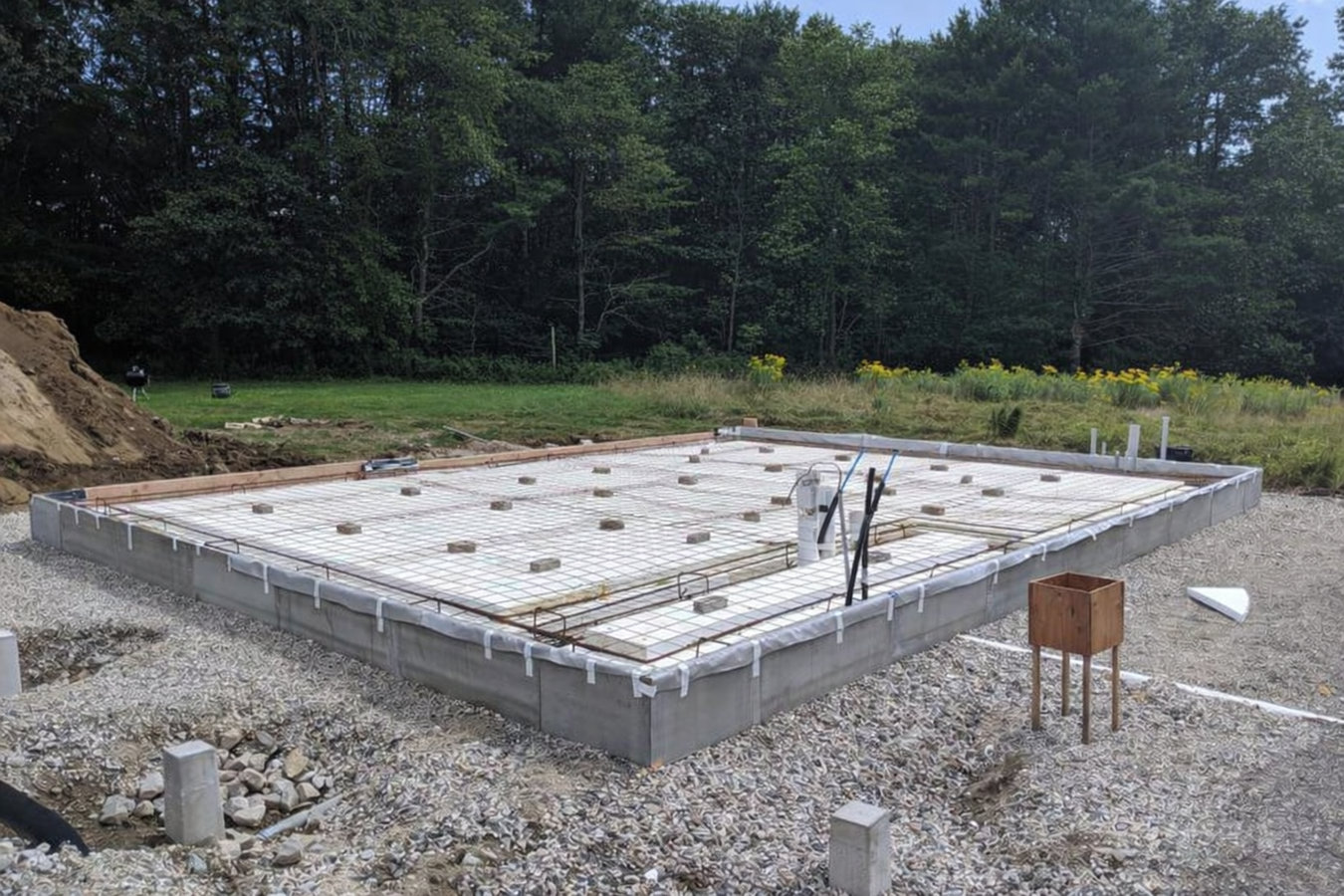
Before any framing goes up, you need a foundation that is built for Corona's clay soils, permitted by the city, and reinforced for seismic conditions. We handle all of it.
Slab foundation building in Corona means grading and compacting the soil, laying a gravel drainage bed, placing steel reinforcement, and pouring a single flat concrete slab that becomes both the floor and structural base of your home - most standard residential jobs run one to three weeks of active work once the permit is approved.
Slab foundations are the standard choice for new residential construction throughout Southern California, and for good reason - the local climate and soil conditions make them practical and cost-effective. But building a slab in Corona is not the same as building one somewhere with stable, flat ground. The clay soils here expand and contract with the seasons, and that movement is what causes slabs to crack and shift when site prep is done too fast or skipped entirely.
If your project includes concrete footings as part of the perimeter edge, our concrete footings service is handled as part of the same pour schedule. KeenCraft Corona Concrete manages the permit and inspection process through the City of Corona so your project stays on track from start to finish.
Some of these signs point to a new build situation. Others show up on existing properties. Either way, they are worth acting on before the problem gets more expensive.
If you are starting a new home, an accessory dwelling unit, or a room addition in Corona, you need a slab foundation before any framing can begin. This is the most straightforward reason to call - no other work can proceed until the slab is in place and inspected by the city.
Small surface cracks during curing are normal and usually cosmetic. But cracks you can fit a coin into - especially diagonal ones running from corners, or cracks where one side has shifted up or down - are a sign the slab may be moving or settling unevenly. In Corona, clay soils are the most common cause. Getting an assessment sooner gives you more options.
When a slab shifts, the walls and door frames above it shift too. If doors that used to swing freely now stick, or if you can see gaps forming at window corners, the slab underneath may be moving. This is a symptom that shows up in Corona homes built on clay-heavy soils, particularly after dry summers followed by wet winters.
Corona gets most of its rain between November and March. If water consistently pools against the base of your home after a storm, the slab or drainage around it may not be directing water away properly. Persistent moisture near a slab accelerates deterioration and contributes to the soil movement that causes cracking and settling over time.
We build residential slab foundations for new homes, accessory dwelling units, garage conversions, and room additions throughout Corona and the surrounding Inland Empire. Every project starts with site assessment and soil evaluation - we check what we are working with before pricing the job, because skipping that step is how contractors underbid and then surprise you with change orders. All projects include permit application to the City of Corona, required inspections, and final documentation you can file with your property records.
For projects where the slab needs to connect to a more complex structural system, our foundation installation service handles broader structural scope including raised foundations and situations requiring a full engineering assessment. Most standard slab projects - new residential builds, ADUs on flat or gently sloped lots - fall within the scope of what we handle directly.
For homeowners building a primary home or major addition from the ground up - full site prep, forming, reinforcement, pour, and permit handling included.
For accessory dwelling unit permits and garage-to-living-space conversions, where the slab must meet current residential occupancy standards and pass city inspection.
For properties where an older slab has cracked, shifted, or been compromised by plumbing leaks or tree roots, and patching is no longer a realistic long-term option.
Corona has been one of the faster-growing cities in Riverside County for decades, and that growth means a wide range of construction conditions exist side by side - newer neighborhoods with recently developed lots, older properties with slabs poured in the 1980s under less stringent standards, and hillside parcels where drainage and soil stability require extra attention. The clay soils common throughout the area expand with every wet season and contract during the hot, dry summers Corona regularly sees above 95 degrees. A slab built without accounting for that movement will show cracks within a few years, regardless of how clean the pour looks on day one.
The City of Corona's Building and Safety Division runs an active inspection process for foundation work, which is genuinely in your favor as a homeowner - it means someone other than the contractor is checking the work. Contractors who have not worked in Corona before sometimes underestimate how the city schedules inspections at multiple stages, and that can stall a project that was otherwise on track. We serve homeowners throughout Corona and across the wider Inland Empire including Fontana, where the same soil conditions and seismic considerations apply. The California Geological Survey documents the expansive soil and fault zone conditions that make proper site prep non-negotiable for foundation work in this region.
We respond within one business day. Slab foundation work is too variable to price accurately over the phone, so we schedule a free on-site visit to assess your soil conditions, lot access, and project scope before providing a written, itemized estimate.
We submit the permit application to the City of Corona's Building and Safety Division on your behalf. Approval can take a few days to a couple of weeks depending on project complexity - we build this into your timeline from the start so there are no surprises.
Once the permit is approved, we grade and compact the soil, lay the gravel drainage bed, and install any required plumbing or conduit before forming the slab. A city inspector visits to verify the steel reinforcement and setup before any concrete is poured.
The concrete pour typically takes one day. We take hot-weather precautions during Corona's summer months - early-morning scheduling and curing compound application - to protect the surface. After roughly seven days the slab is ready for framing, and the city's final inspection closes out your permit.
Free written estimate. We handle permits and city inspections. No pressure, no obligation.
(951) 416-3795Corona's clay-heavy ground requires specific site prep decisions - soil removal, adjusted slab thickness, drainage planning - that a contractor without local experience will overlook. We have poured slabs across Corona and throughout Riverside County, and we account for local ground conditions from the first day on site.
The City of Corona requires multiple inspections during foundation work, and a contractor who is not familiar with the city's scheduling can stall your project at every stage. We manage the entire permit process and coordinate inspections so your job keeps moving without unnecessary delays.
Corona sits near active fault systems, and California's building code for this region requires specific rebar placement and footing depth to handle ground movement. Every slab we pour is reinforced to those standards - not just what looks right, but what passes a city inspection and protects your structure.
We have completed slab foundation work across the 12 cities in our service area, from new residential builds in Corona to ADU projects in Riverside County. That track record gives you assurance that we know how to navigate local permit offices, seasonal concrete scheduling, and the soil conditions that vary across the region.
A slab foundation is the most consequential concrete pour on a residential project - every wall, door, and roof above it depends on it staying level and solid. We bring the local knowledge, permit experience, and construction standards that give you confidence the job was done right from the ground up. You can verify our license through the California Contractors State License Board before signing anything.
For homeowners who need a full foundation system evaluated and installed - including raised foundations and more complex structural situations.
Learn moreFootings anchor the perimeter of your slab and transfer structural loads into the ground - often poured as part of the same project.
Learn morePermit slots and contractor schedules fill up fast in Corona - getting your estimate now means your project does not get pushed into the next construction season.