Foundation Raising
If your structure has already settled and needs to be lifted back to level, foundation raising addresses the movement that inadequate footings often cause.
Learn more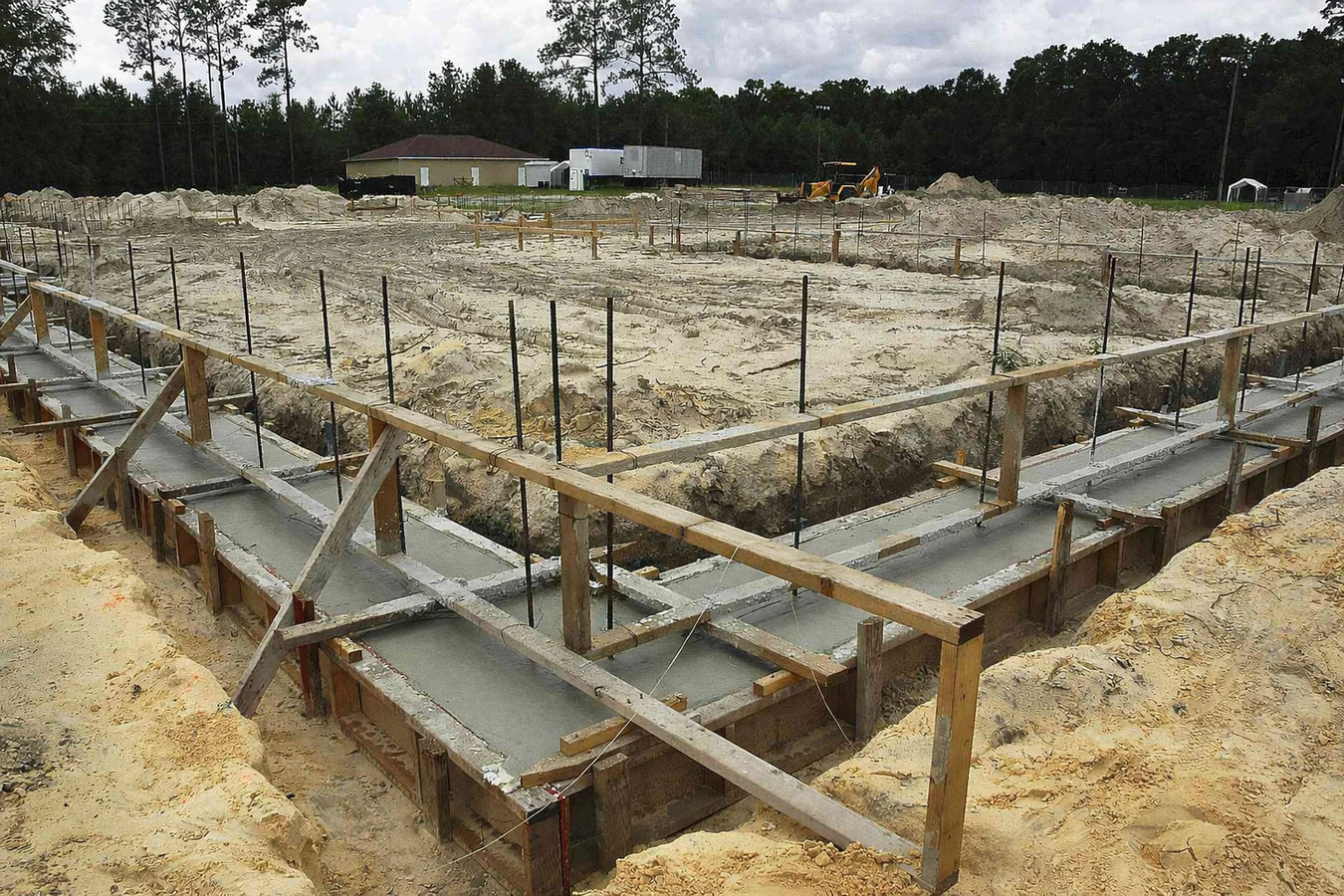
Every addition, ADU, garage, or retaining wall your property needs starts with a footing built for what Corona's soil and seismic zone actually require - not just what passes the minimum standard.
Concrete footings in Corona are the underground concrete bases that transfer the weight of a structure safely into the ground below - most residential footing jobs take one to three days of active work, with the full timeline from permit to construction-ready running four to six weeks depending on project complexity and city inspection scheduling.
A footing is the first part of construction and the part most homeowners never think about - until something goes wrong. When a footing is undersized, too shallow, or poured without the right steel reinforcement for local soil conditions, the structure above it eventually shows it: walls crack, doors stick, floors shift, and retaining walls start to lean. In Corona, where expansive clay soils swell and shrink with the seasons and Southern California's seismic zone requirements mandate specific reinforcement, the quality of a footing job is what separates a structure that stays level for decades from one that starts moving within a few years.
For projects that go beyond individual footings to a full foundation system for a new home or addition, our foundation installation service covers that full scope. KeenCraft Corona Concrete manages the permit application and inspection process through the City of Corona Building and Safety Division on every job.
Some of these signals appear on structures that are still being planned. Others show up slowly on existing homes - often over years before anyone connects the symptoms to what is happening underground.
Cracks that angle away from the corners of door frames or window openings - especially ones that have appeared gradually over a year or two - are often a sign that part of your footing or foundation has shifted. In Corona, this kind of movement is frequently linked to the expansive clay soils that swell and shrink with the seasons. It does not always mean a catastrophic problem, but it does mean a professional should assess the situation before the movement progresses.
When a footing settles unevenly, the frame of the structure shifts slightly out of square. The first place you will notice this is usually a door that used to swing freely but now drags on the floor, or a window that is suddenly hard to open. This is especially common in older Corona homes built in the 1970s and 1980s, where footings may not have been designed for the soil conditions we understand better today.
Any new structure attached to or built near your home - a room addition, covered patio, detached garage, or accessory dwelling unit - requires new footings before a permit will be issued. This is the most straightforward reason to call. Getting the footing engineered and built correctly at this stage is significantly less expensive than correcting problems after the structure above it has been framed.
Retaining walls in older Corona neighborhoods are often built without adequate footings, and the clay soil movement here accelerates the problem. If a retaining wall on your property has started to lean, bow outward, or pull away from adjacent walls or fencing, the footing supporting it has likely failed or was never adequate. A leaning retaining wall is a safety concern, not just a cosmetic one - and the longer it goes unaddressed, the more expensive the repair becomes.
We install concrete footings for residential additions, detached garages, accessory dwelling units, retaining walls, covered patios, and other structures throughout Corona and the wider Inland Empire. Every footing job begins with a site visit - we look at where the structure will go, assess drainage and soil conditions, and review your project plans before providing a written estimate. In a city with the soil variability of Corona, a quote given over the phone without seeing the site is rarely an accurate number.
If your project is a full foundation pour for a new home or large addition, our foundation installation service covers that scope. For projects where the footing is tied to a new structure that also needs a foundation raised or leveled, our foundation raising service addresses that combination. Every footing job we do includes permit filing, inspection coordination, and final closeout with the City of Corona.
For room additions and attached structures where the footing runs in a continuous perimeter beneath the walls - the most common footing type for residential additions in California.
For covered patios, pergolas, detached structures, and carports where individual posts or columns require an isolated concrete pad to distribute their load into the ground.
For retaining walls that need a structural base to resist soil pressure, and for accessory dwelling units where the footing must meet current residential occupancy standards.
Corona and the surrounding Inland Empire sit on expansive clay soils that swell when they absorb water during the winter rainy season and shrink back down when they dry out in the summer. This constant movement puts stress on footings that were not designed for local conditions - and it is one of the leading reasons why older homes in Corona develop the diagonal cracks and sticking doors that signal foundation trouble. A contractor who knows this area will often design footings that go deeper or wider than the code minimum, specifically because the soil here moves more than in other parts of Southern California.
Corona is also in a seismically active part of Southern California, near both the Elsinore and Chino fault systems. California's building requirements for this region mandate specific steel reinforcement and footing dimensions designed to help structures hold together during ground shaking. These requirements are built into the permit and inspection process - your city inspector will verify the steel placement and dimensions before the concrete is ever poured. We serve properties across Corona and throughout the region including Riverside, where the same soil and seismic conditions apply and the same quality of footing work is required.
Here is the full process from your first call to the point where your contractor can start framing - most residential footing projects take four to six weeks from first contact to construction-ready.
We will ask you a few basic questions - what you are building, roughly where on your property it will go, and whether you have already spoken with the city about permits. Most footing costs depend on what we find when we look at your yard and soil, so we schedule a site visit before giving you a firm price. We aim to respond to all inquiries within one business day.
For most footing work in Corona, we submit the permit application to the City of Corona Building and Safety Division on your behalf. Approval typically takes one to three weeks depending on project complexity and the building department's current workload. We handle the paperwork and keep you updated on the timeline - you do not need to take any action during this step.
Once the permit is approved, the crew digs the trenches or holes to the required depth, sets the forms to shape the concrete, and places the steel reinforcement. Before any concrete is poured, a city inspector visits to verify that the setup meets all requirements. This inspection must happen before the pour - it is your best protection against problems that are impossible to fix after the concrete is set.
The concrete is poured into the forms, leveled, and smoothed. In Corona's warm climate, we take extra steps to protect fresh concrete from drying too quickly. The forms come off within 24 to 48 hours, and the footing needs at least a week before framing can begin - and reaches full strength at around the 28-day mark. We coordinate the final inspection with the city so your project can proceed on schedule.
We respond to all estimate requests within one business day. No pressure - just straight answers about what your project needs.
(951) 416-3795A footing is the part of your project you will never see again after it is poured - which makes it the part where cutting corners causes the most damage over time.
Our California Contractors State License Board license number is listed on every estimate, and you can verify it on the CSLB website before you sign anything. We carry general liability and workers' compensation insurance on every job, and we pull permits with the City of Corona for all structural footing work. That means an independent city inspector signs off on the setup before the pour - not just our own crew.
We have installed footings for residential additions, ADUs, garages, and retaining walls throughout Corona and the surrounding Inland Empire. Local experience means we know how the soil behaves in different parts of the city, what the city's building department expects at inspection, and how to manage pours in summer heat - knowledge that directly affects whether your footing holds up over time.
Southern California's seismic requirements call for more steel reinforcement than you would see in a lower-risk area of the country, and we design and build to that standard on every job. Corona's location near active fault systems is a real factor in how footings here need to be built. We never install a footing to the bare minimum just to pass inspection - we build it to hold up through whatever the ground does over the next few decades.
You will know upfront how long the permit process typically takes at the City of Corona, when the city inspector will visit, and when framing can start. We coordinate every inspection step and keep you updated so your project timeline does not get derailed by scheduling surprises. Most homeowners who reach out during spring or fall should plan for a four-to-six-week total timeline from first contact to a ready-to-build footing.
Choosing a contractor for footing work is choosing who is responsible for the structural integrity of everything you build above it. We bring the licensing, insurance, local knowledge, and permit discipline that protects your investment long after the crew drives away. The American Concrete Institute standards and California's seismic requirements for this region both inform how we approach every footing we install.
If your structure has already settled and needs to be lifted back to level, foundation raising addresses the movement that inadequate footings often cause.
Learn moreFor new construction projects where the full foundation system - not just individual footings - needs to be engineered and installed from the ground up.
Learn moreSpring and fall are the busiest seasons for footing work in the Inland Empire - getting on the calendar early means your project starts on your timeline, not ours.